
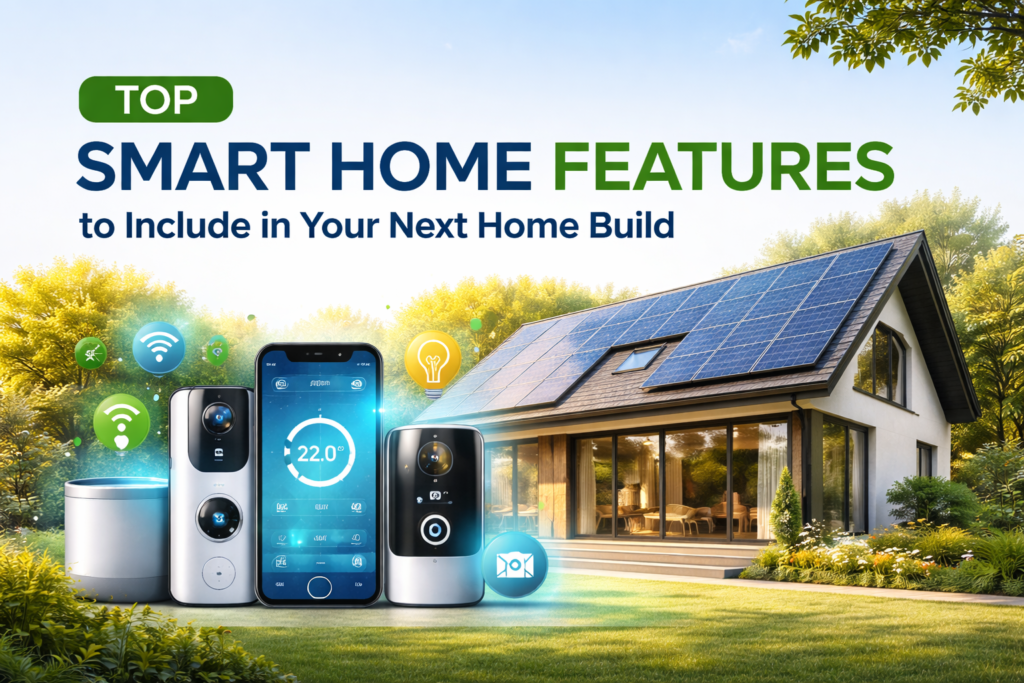
Technology is transforming the way homes are designed and built. Modern homeowners are increasingly looking for properties that offer comfort, efficiency, security, and convenience, all of which can be achieved through smart home technology.
When planning a new home build, integrating smart technology from the beginning can make the house more efficient, secure, and future-ready. Smart homes allow homeowners to control lighting, temperature, appliances, and security systems using smartphones or voice assistants.
In this guide, we’ll explore the top smart home features you should consider when building a modern home and how these technologies can enhance everyday living.
Table of Contents
ToggleWhat Is a Smart Home?
A smart home is a house equipped with connected devices that can be controlled remotely through a smartphone, tablet, or voice assistant.
These devices communicate through a home network, allowing homeowners to automate everyday tasks such as:
-
adjusting lighting
-
controlling temperature
-
monitoring security
-
managing energy usage
According to Statista, the global smart home market is expected to grow rapidly as more homeowners adopt connected technologies.
Why Include Smart Technology in a New Home Build?
Adding smart home features during construction is easier and more cost-effective than retrofitting them later.
Key benefits include:
Convenience
Smart systems allow homeowners to control multiple functions from a single device.
Energy Efficiency
Automated systems optimize energy usage and reduce electricity bills.
Improved Security
Advanced monitoring systems protect homes from intrusions.
Increased Property Value
Smart homes are becoming highly desirable in the real estate market.
According to the National Association of Home Builders, smart technology is one of the most requested features in modern homes.
1. Smart Lighting Systems
Smart lighting is one of the most popular smart home upgrades.
These systems allow homeowners to control lighting through apps or voice assistants such as:
-
Amazon Alexa
-
Google Assistant
-
Apple HomeKit
Features include:
-
remote light control
-
automatic dimming
-
motion sensors
-
energy-efficient LED integration
Smart lighting can also improve home security by automatically turning lights on when homeowners are away.
2. Smart Thermostats
Heating and cooling account for a large portion of household energy consumption.
Smart thermostats help reduce energy waste by learning household routines and adjusting temperatures automatically.
Popular smart thermostat brands include:
-
Nest
-
Ecobee
-
Honeywell
These devices allow homeowners to:
-
control temperature remotely
-
schedule heating and cooling
-
monitor energy usage
Smart thermostats can reduce heating and cooling costs by 10–15% annually.
3. Smart Security Systems
Home security is one of the most important considerations when building a new house.
Smart security systems provide real-time monitoring and alerts through mobile devices.
Features typically include:
-
smart doorbell cameras
-
motion detection
-
remote security monitoring
-
facial recognition technology
-
mobile alerts
Smart security cameras allow homeowners to check their property from anywhere in the world.
4. Smart Locks and Keyless Entry
Smart locks eliminate the need for traditional keys.
Homeowners can unlock doors using:
-
smartphones
-
PIN codes
-
fingerprint recognition
-
voice assistants
Benefits include:
-
improved security
-
remote access for guests
-
activity monitoring
These systems are especially useful for families or homeowners who frequently travel.
5. Smart Home Hubs and Voice Assistants
Smart home hubs connect different devices and allow them to work together.
Common smart hubs include:
-
Amazon Echo
-
Google Nest Hub
-
Apple HomePod
These systems allow homeowners to control multiple devices through simple voice commands.
For example:
“Turn off the lights.”
“Set the temperature to 22°C.”
“Lock the front door.”
This integration creates a seamless smart home experience.
6. Smart Appliances
Modern kitchens and laundry rooms are increasingly integrating smart technology.
Smart appliances include:
-
refrigerators with touchscreen displays
-
WiFi-enabled ovens
-
smart washing machines
-
connected dishwashers
These appliances allow homeowners to monitor and control household tasks remotely.
For example, a smart oven can be preheated using a smartphone before arriving home.
7. Smart Home Energy Monitoring
Energy monitoring systems help homeowners track electricity usage in real time.
These systems provide insights into:
-
which appliances consume the most energy
-
peak electricity usage times
-
opportunities to reduce energy waste
This information allows homeowners to make smarter energy decisions and reduce monthly utility costs.
8. Smart Irrigation Systems
Outdoor smart technology is becoming increasingly popular.
Smart irrigation systems automatically adjust watering schedules based on:
-
weather conditions
-
soil moisture levels
-
seasonal changes
This helps homeowners maintain healthy landscapes while conserving water.
9. Smart Window Treatments
Motorized blinds and smart curtains are becoming popular additions to modern homes.
These systems allow homeowners to:
-
control window coverings remotely
-
schedule opening and closing times
-
optimize natural lighting
Automated window treatments can also help improve energy efficiency by controlling heat gain and loss.
10. Whole-Home Automation Systems
The most advanced smart homes use centralized automation systems.
These systems connect all devices into one ecosystem, allowing homeowners to control their entire home through a single interface.
Examples include:
-
lighting
-
climate control
-
security
-
entertainment systems
Whole-home automation creates a fully connected living environment.
Smart Home Design Tips for New Construction
If you plan to include smart technology in your home build, consider these important tips.
Plan Smart Infrastructure Early
Installing smart home wiring and network infrastructure during construction is much easier than upgrading later.
Builders can install:
-
centralized control panels
-
structured wiring
-
dedicated smart device hubs
Ensure Strong WiFi Coverage
Smart homes rely on reliable internet connectivity.
Installing a whole-home WiFi system or mesh network ensures strong coverage throughout the house.
Choose Compatible Devices
Not all smart devices work together.
Choosing systems that integrate with common platforms like Google Home, Alexa, or Apple HomeKit ensures compatibility.
The Future of Smart Homes
Smart home technology continues to evolve rapidly.
Future homes will likely include:
-
AI-powered automation
-
advanced energy management systems
-
integrated renewable energy systems
-
voice-controlled home management
As technology improves, smart homes will become even more efficient and convenient.
Build a Modern Smart Home with Solid Core Construction
At Solid Core Construction, we specialize in building modern homes designed for comfort, efficiency, and advanced technology.
Whether you’re planning a custom home or upgrading your existing property, our team can help you integrate smart home features into your construction project.
Learn more about our services:
Frequently Asked Questions
Are smart homes expensive to build?
Smart home systems vary in cost depending on the level of automation. Many basic smart features are affordable and can be expanded over time.
Can smart home technology increase property value?
Yes. Smart homes are becoming increasingly attractive to buyers and can improve resale value.
Is smart home technology secure?
Most smart home devices use encrypted networks and secure authentication methods to protect user data.
Conclusion
Smart home technology is transforming modern residential construction. By integrating smart lighting, security systems, automation, and energy management solutions, homeowners can enjoy greater comfort, convenience, and efficiency.
When building a new home, planning for smart technology from the beginning ensures your property remains future-ready and highly functional.