
The demand for energy-efficient and environmentally responsible housing is growing rapidly across Canada. Rising energy costs, climate concerns, and government sustainability initiatives have pushed homeowners and builders to explore better construction methods.
One of the most innovative solutions is the net-zero home.
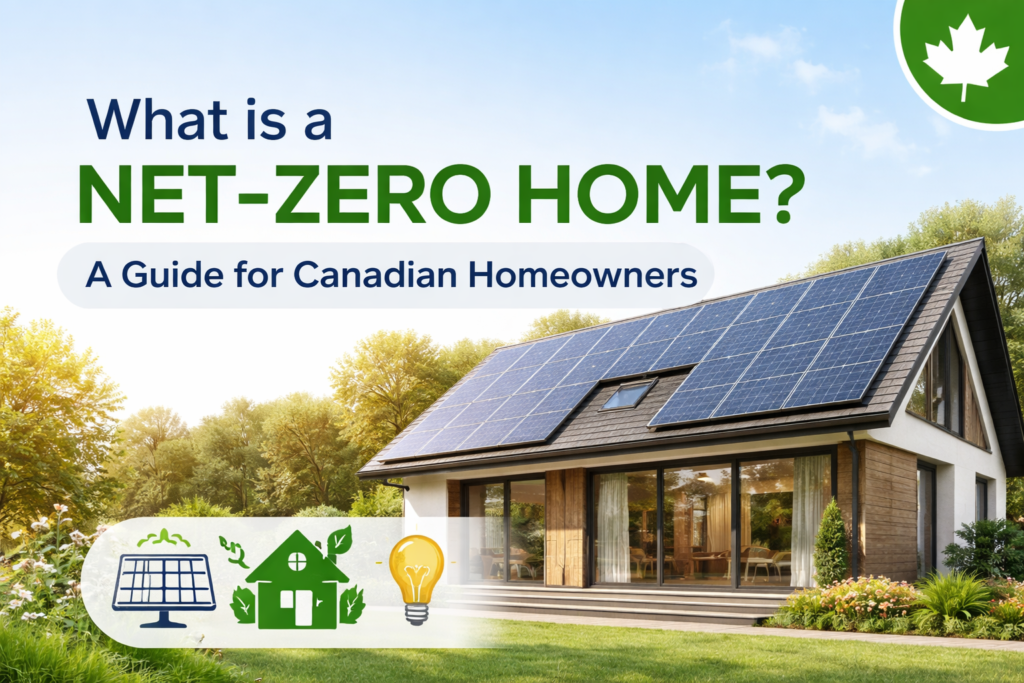
Net-zero homes represent the future of residential construction by producing as much energy as they consume annually. This means homeowners can significantly reduce energy bills while contributing to a cleaner environment.
In this detailed guide, we’ll explore everything Canadian homeowners need to know about net-zero homes, including how they work, their benefits, costs, and how to build one successfully.
Table of Contents
ToggleWhat Is a Net-Zero Home?
A net-zero home is a residential building designed to produce as much renewable energy as it consumes over a year.
This is achieved through a combination of:
-
Highly efficient building design
-
Superior insulation and airtight construction
-
Energy-efficient appliances and HVAC systems
-
Renewable energy generation (typically solar panels)
When these elements work together, the home’s energy production offsets its energy consumption, resulting in a net zero energy balance.
According to Natural Resources Canada, net-zero homes can use up to 80% less energy than conventional homes.
Why Net-Zero Homes Are Growing in Canada
Canada’s harsh winters and high heating demand make energy efficiency particularly important.
Several factors are driving the growth of net-zero construction:
Rising Energy Costs
Utility prices have steadily increased, making energy-efficient homes more financially attractive.
Government Climate Targets
Canada aims to achieve net-zero greenhouse gas emissions by 2050, encouraging sustainable construction practices.
External reference:
https://www.canada.ca/en/services/environment/weather/climatechange
Increasing Homebuyer Demand
Modern buyers are increasingly interested in homes that are energy-efficient, environmentally responsible, and technologically advanced.
Long-Term Financial Savings
Although net-zero homes require a higher initial investment, they offer significant long-term savings on utility bills.
Key Features of a Net-Zero Home
Net-zero homes rely on several advanced construction strategies.
1. High-Performance Building Envelope
The building envelope refers to the walls, roof, floors, windows, and doors that separate indoor and outdoor environments.
A net-zero home typically includes:
-
High-performance insulation
-
Airtight construction techniques
-
Triple-pane windows
-
Thermal bridge reduction
These features prevent heat loss during winter and maintain cool indoor temperatures in summer.
2. Energy-Efficient Heating and Cooling Systems
Heating accounts for a significant portion of energy consumption in Canadian homes.
Net-zero homes often include:
-
Air-source heat pumps
-
Ground-source (geothermal) heating systems
-
High-efficiency furnaces
-
Radiant floor heating
These systems deliver comfort while using far less energy than traditional heating solutions.
3. Solar Energy Systems
Solar panels are the most common renewable energy source used in net-zero homes.
Solar photovoltaic (PV) systems convert sunlight into electricity, allowing homeowners to generate their own power.
During sunny periods, excess electricity may be exported back to the power grid through net metering programs.
4. Heat Recovery Ventilation (HRV)
Net-zero homes are built to be extremely airtight. Because of this, proper ventilation is essential.
HRV systems:
-
Maintain healthy indoor air quality
-
Recover heat from outgoing air
-
Reduce heating and cooling costs
This ensures fresh air without energy waste.
5. Energy-Efficient Appliances and Lighting
Net-zero homes use appliances and fixtures designed to minimize electricity consumption.
Examples include:
-
ENERGY STAR appliances
-
LED lighting systems
-
Smart thermostats
-
Energy monitoring systems
These technologies help homeowners track and reduce energy usage
Benefits of Net-Zero Homes
Building a net-zero home offers several advantages for homeowners.
Lower Utility Bills
One of the biggest benefits is dramatically reduced energy costs.
Because the home generates its own electricity, homeowners may pay very little for utilities.
In some cases, homeowners even earn credits from the energy grid.
Environmental Sustainability
Net-zero homes significantly reduce carbon emissions.
By relying on renewable energy and efficient building practices, these homes help reduce environmental impact.
Greater Indoor Comfort
Net-zero homes maintain stable indoor temperatures thanks to:
-
superior insulation
-
airtight construction
-
efficient ventilation systems
This results in more comfortable living conditions year-round.
Higher Property Value
Energy-efficient homes are becoming more attractive to buyers.
As sustainability becomes a priority, net-zero homes are expected to increase in market value.
Cost of Building a Net-Zero Home in Canada
A common question homeowners ask is:
How much does it cost to build a net-zero home?
Typically, net-zero homes cost 5% to 15% more than traditional homes due to:
-
higher quality materials
-
advanced insulation systems
-
renewable energy installations
However, these additional costs are often recovered through long-term energy savings.
In addition, Canadian homeowners may qualify for government incentives and energy efficiency rebates.
Steps to Build a Net-Zero Home
Building a net-zero home requires careful planning and collaboration with experienced builders.
Here are the key steps involved.
Step 1: Smart Home Design
The design phase is critical.
Architects and builders focus on:
-
optimizing solar orientation
-
reducing energy demand
-
maximizing natural light
Smart design can significantly reduce energy requirements.
Step 2: High-Efficiency Construction
Builders use advanced techniques to create airtight and highly insulated structures.
This includes:
-
insulated concrete forms
-
spray foam insulation
-
advanced framing techniques
These methods dramatically improve energy performance.
Step 3: Renewable Energy Installation
Solar panels are typically installed after the home structure is completed.
The system is designed to generate enough energy to offset annual consumption.
Step 4: Energy Testing and Certification
Before completion, net-zero homes undergo testing to verify energy performance.
Common testing includes:
-
blower door tests
-
energy modeling
-
system efficiency assessments
These tests ensure the home meets net-zero standards.
Net-Zero vs Passive Homes
Many homeowners also hear about Passive Houses.
Although similar, there are differences.
| Feature | Net-Zero Home | Passive Home |
|---|---|---|
| Energy Production | Produces renewable energy | Focuses on energy efficiency |
| Solar Panels | Required | Optional |
| Energy Balance | Net zero | Very low energy consumption |
Both are excellent sustainable housing solutions.
Challenges of Building Net-Zero Homes
While net-zero homes offer many benefits, there are some challenges.
Higher Initial Costs
Advanced materials and renewable energy systems increase upfront expenses.
Skilled Construction Required
Not all builders have experience with net-zero construction.
Design Complexity
Achieving net-zero performance requires detailed planning and engineering.
Working with experienced builders can help overcome these challenges.
Net-Zero Homes and the Future of Construction
The construction industry is rapidly moving toward sustainability.
Many experts believe that net-zero homes will eventually become the standard for new residential construction.
Advances in:
-
solar technology
-
energy storage
-
smart home automation
will continue to make net-zero homes more affordable and accessible.
Build Your Energy-Efficient Home with Solid Core Construction
At Solid Core Construction, we focus on building homes that combine durability, efficiency, and modern design.
Whether you’re planning a custom home or exploring energy-efficient construction options, our team can guide you through every step of the building process.
Explore our services:
Frequently Asked Questions
Are net-zero homes expensive?
Net-zero homes typically cost slightly more to build initially, but the long-term savings on energy bills often offset the higher construction cost.
Can net-zero homes work in cold climates like Canada?
Yes. Net-zero homes are designed specifically to perform well in cold climates through superior insulation and energy-efficient heating systems.
Do net-zero homes require solar panels?
Most net-zero homes rely on solar energy to offset electricity consumption, although other renewable energy systems can also be used.
How long does it take to build a net-zero home?
The construction timeline is similar to traditional homes but may include additional planning and energy testing stages.
Conclusion
Net-zero homes are transforming the future of residential construction in Canada. By combining energy-efficient design, renewable energy, and advanced building techniques, these homes offer both financial and environmental benefits.
For homeowners looking to build a sustainable, high-performance house, net-zero construction represents a smart investment in the future.