
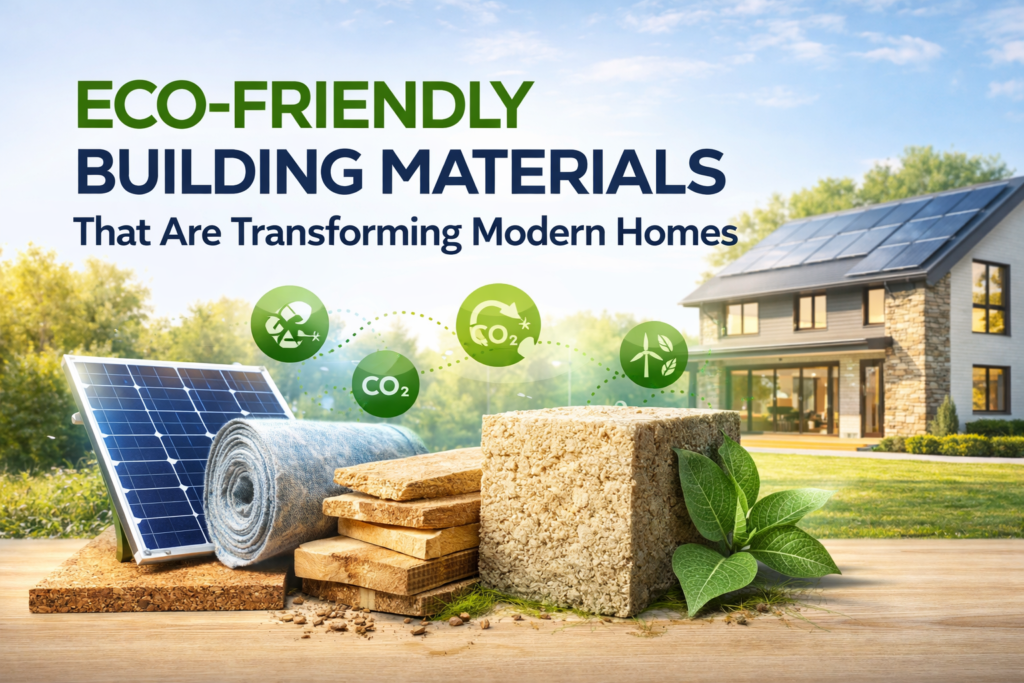
Sustainability is no longer just a trend—it has become a key priority in modern construction. As homeowners become more environmentally conscious, the demand for eco-friendly building materials continues to grow across Canada.
From reducing carbon footprints to improving energy efficiency, sustainable materials are transforming how homes are designed and built.
Whether you’re planning a custom home or a renovation project, choosing the right materials can make a significant difference in both environmental impact and long-term cost savings.
In this guide, we’ll explore the top eco-friendly building materials that are shaping the future of modern homes.
Table of Contents
ToggleWhy Eco-Friendly Building Materials Matter?
Traditional construction materials often contribute to:
- high carbon emissions
- excessive energy consumption
- environmental degradation
Eco-friendly materials, on the other hand, are designed to:
- reduce environmental impact
- improve energy efficiency
- enhance indoor air quality
- increase durability and lifespan
According to Natural Resources Canada, energy-efficient building practices play a crucial role in reducing greenhouse gas emissions.
Key Benefits of Eco-Friendly Materials
Reduced Energy Consumption
Sustainable materials improve insulation and reduce heating and cooling costs.
Lower Environmental Impact
Many eco-friendly materials are renewable, recycled, or responsibly sourced.
Healthier Living Spaces
Non-toxic materials improve indoor air quality by reducing harmful chemicals.
Long-Term Cost Savings
Although some materials may cost more upfront, they often reduce maintenance and energy costs over time.
Top Eco-Friendly Building Materials for Modern Homes
Let’s explore the most impactful materials transforming the construction industry today.
1. Bamboo: A Fast-Growing Renewable Resource
Bamboo is one of the most sustainable building materials available.
It grows rapidly—much faster than traditional hardwood—and can be harvested without damaging the environment.
Uses:
- flooring
- cabinetry
- wall panels
Benefits:
- strong and durable
- renewable and biodegradable
- modern aesthetic appeal
Bamboo is an excellent alternative to traditional wood products.
2. Recycled Steel
Steel is one of the most recycled materials in the world, making it a sustainable choice for construction.
Uses:
- structural framing
- roofing
- reinforcements
Benefits:
- highly durable
- resistant to pests and fire
- reduces the need for new raw materials
Recycled steel also improves structural strength and longevity.
3. Insulated Concrete Forms (ICFs)
ICFs are becoming increasingly popular in energy-efficient construction.
They consist of concrete poured between layers of insulation, creating highly efficient walls.
Benefits:
- superior insulation
- reduced energy loss
- increased durability
- soundproofing advantages
ICFs are particularly effective in cold climates like Canada.
4. Reclaimed Wood
Reclaimed wood is salvaged from old buildings, barns, and factories.
Instead of cutting new trees, builders reuse existing wood for construction and design.
Uses:
- flooring
- beams
- furniture
- accent walls
Benefits:
- reduces deforestation
- unique character and appearance
- environmentally responsible
Reclaimed wood adds both sustainability and style to modern homes.
5. Low-E Glass Windows
Windows play a major role in a home’s energy efficiency.
Low-emissivity (Low-E) glass helps regulate indoor temperatures by reflecting heat.
Benefits:
- reduces heat loss in winter
- minimizes heat gain in summer
- lowers energy bills
External reference:
https://www.energy.gov
Low-E windows are a key component of energy-efficient home design.
6. Cork
Cork is a renewable material harvested from the bark of cork oak trees.
The tree continues to grow after harvesting, making cork highly sustainable.
Uses:
- flooring
- insulation
- wall coverings
Benefits:
- natural insulation
- moisture resistant
- biodegradable
Cork is also comfortable underfoot, making it ideal for residential spaces.
7. Recycled Plastic Materials
Recycled plastics are increasingly used in construction to reduce waste.
They are often converted into durable building components such as:
- decking
- roofing materials
- insulation panels
Benefits:
- reduces landfill waste
- highly durable
- low maintenance
This innovation helps turn waste into valuable building resources.
8. Hempcrete
Hempcrete is a bio-composite material made from hemp fibers, lime, and water.
It is lightweight, breathable, and environmentally friendly.
Benefits:
- excellent insulation
- carbon-negative material
- resistant to mold and pests
Hempcrete is gaining popularity as a sustainable alternative to traditional concrete.
9. Solar Roofing Materials
Solar-integrated roofing systems allow homeowners to generate renewable energy directly from their roofs.
These systems combine roofing materials with solar technology.
Benefits:
- reduces electricity costs
- supports renewable energy use
- increases property value
Solar roofing is becoming a key feature of modern eco-friendly homes.
10. Advanced Insulation Materials
Proper insulation is essential for energy efficiency.
Eco-friendly insulation options include:
- cellulose insulation (made from recycled paper)
- sheep’s wool insulation
- spray foam alternatives with low environmental impact
These materials reduce heat loss and improve indoor comfort.
How to Choose the Right Eco-Friendly Materials
Selecting the right materials depends on several factors.
Climate Conditions
In Canada, materials must withstand extreme weather conditions.
High-performance insulation and durable materials are essential.
Budget Considerations
While eco-friendly materials may have higher upfront costs, they often provide long-term savings.
Project Type
The choice of materials may vary depending on whether you are building a new home or renovating an existing one.
Builder Expertise
Working with experienced builders ensures proper installation and performance of sustainable materials.
Eco-Friendly Construction Trends in 2026
The construction industry is rapidly evolving toward sustainability.
Key trends include:
- net-zero homes
- smart energy systems
- modular construction
- green certifications (LEED)
These trends are shaping the future of residential construction in Canada.
Build Sustainable Homes with Solid Core Construction
At Solid Core Construction, we are committed to building homes that combine quality, durability, and sustainability.
Whether you are planning a custom home or a renovation project, our team helps you choose the right materials for long-term performance and energy efficiency.
Explore our services:
Visit our website:
https://solidcoreconstruction.ca/
Frequently Asked Questions
Are eco-friendly building materials expensive?
Some materials may cost more upfront, but they often reduce energy and maintenance costs over time.
Do eco-friendly homes last longer?
Yes. Many sustainable materials are more durable and resistant to environmental damage.
Can I use eco-friendly materials in renovations?
Absolutely. Sustainable materials can be incorporated into both new builds and renovation projects.
Conclusion
Eco-friendly building materials are transforming modern homes by improving energy efficiency, reducing environmental impact, and enhancing long-term durability.
As sustainability becomes a priority in construction, choosing the right materials is essential for building homes that are both efficient and future-ready.
Investing in eco-friendly construction today not only benefits homeowners financially but also contributes to a more sustainable future.